You’re filling up more often than you used to. The commute hasn’t changed, and the dashboard is completely dark. No check engine light, no warning chime, nothing to plug a scanner into. So either the car is fine and you’re imagining it, or something is wrong that the car has no way to tell you about.
It’s almost always the second one. Bad gas mileage with no check engine light is one of the most common complaints that walks into a shop, and one of the most misunderstood. The light isn’t a fuel economy gauge. Here’s how a technician works a complaint like this, in order, and what you can measure yourself first.
Bad Gas Mileage With No Check Engine Light Is Not a Clean Bill of Health
Your engine computer watches a long list of values: sensor voltages, response times, how far it has had to correct the fuel mixture, how quickly things heat up. Each one has a threshold. Cross it, and the computer sets a code and lights the lamp. Stay inside it, and nothing happens.
A part that’s worn out but not yet broken lives in that gap. It still works, just worse than when the car was new, and “worse” isn’t a category the computer has. A dragging brake caliper isn’t monitored at all. Soft tires are monitored for safety, not fuel economy, and only at a fairly extreme point. A thermostat letting the engine run cool sends a coolant temperature reading that is perfectly valid, just low.
So when the dash is dark and the mileage is down, there’s no code to read. The diagnosis has to come from symptoms and measurements. That’s the difference between real engine diagnostics and pulling codes, and it’s the harder half of the job.
Start With a Real Number, Not the Dash Estimate
First we need to know whether the mileage actually dropped, and by how much. “It feels worse” isn’t something anyone can chase.
The average MPG readout on your dash is a computed estimate, and you rarely know what window it’s averaging over or when it was last reset.
Do the math by hand instead. It takes a week and it costs nothing:
- Fill the tank to the first click of the pump handle, not topped off twice.
- Write down the odometer reading, or zero the trip odometer.
- Drive normally until you’re down near a quarter tank.
- Fill to the first click again and note the gallons the pump took.
- Divide the miles you drove by those gallons. That’s your real mileage for that tank.
Do it for at least three tanks. One tank is noise, because a single fill can be off by a gallon depending on the pump and how patient you were with the nozzle. Three in a row tells the truth.
Then compare the right things: this month against the same month last year, not January against July. A technician who can see you went from 27 to 22 on the same run down Wabash Avenue is starting with evidence. One who has only “it seems worse lately” is starting with a hunch.
Rule Out the Season Before You Rule Out the Car
This is the step almost everyone skips, and in Indiana it explains a huge number of complaints by itself.
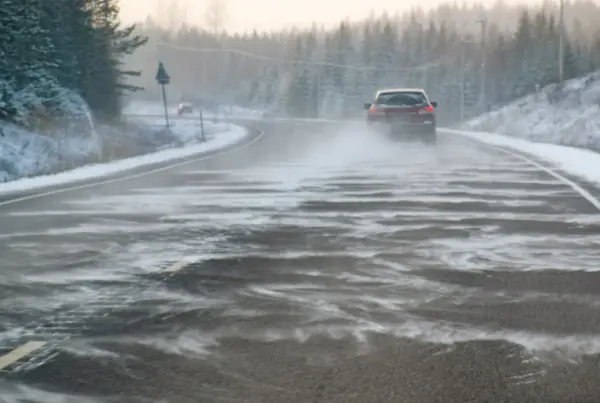
According to the U.S. Department of Energy, a conventional gasoline car gets roughly 15 percent worse mileage in city driving at 20 degrees than at 77 degrees, and on short trips of three to four miles the loss can reach 24 percent. The general expectation once it turns cold is a 10 to 20 percent loss in city driving and a 15 to 33 percent loss on short trips.
Terre Haute sits in that band for months. Our January averages a high of 38 degrees and a low of 19, and December runs 42 and 24. Somebody making a four-mile run from the north side to work and four miles home is on a cold engine both directions, the exact worst case the DOE describes. Drivers coming in from West Terre Haute, Brazil, or Clinton often fare better, because the highway leg warms the engine up.
Several things stack up at once in the cold:
- Friction increases, because cold oil and driveline fluids are thicker. One more reason the grade of oil in your engine matters.
- The engine takes longer to reach the temperature at which it is most efficient, which hits short trips hardest.
- Tire pressure falls as the air gets colder, raising rolling resistance.
- Winter gasoline carries slightly less energy per gallon than summer gasoline.
Summer blends hold about 1.7 percent more energy, and fuel containing 10 percent ethanol costs 3 to 4 percent on its own. Idling in the driveway to warm up doesn’t help either, because idling gets exactly zero miles per gallon. Most manufacturers want you driving off gently after about 30 seconds.
If your drop showed up in November and the car is otherwise behaving normally, the season is the first suspect. If it showed up in June, keep reading.
The Cheap Measurements First: Tire Pressure Against the Placard
Once the season is accounted for, we go after the quick physical measurements before touching a sensor. Tires are first, because soft tires are the most common silent cause of a fuel economy complaint and the easiest to confirm.
Here’s the part most drivers get wrong: the tire pressure warning light is not a fuel economy warning. Federal Motor Vehicle Safety Standard 138 only requires that light when a tire is 25 percent or more below the pressure the manufacturer recommends, and it has up to 20 minutes to do it. If your door placard calls for 35 psi, a tire has to fall to about 26 psi before the lamp is required to light. All four tires can be several pounds soft, all winter, with a dark dashboard.
And soft tires cost real fuel. The Department of Energy puts the penalty at roughly 0.2 percent for every 1 psi below the recommended pressure, and says proper inflation is worth 0.6 percent on average and up to 3 percent in some cases.
So check them yourself, with a gauge, and check them right:
- Check cold, before you drive, not after a trip across Vigo County.
- Use the door jamb placard number, not the number molded into the sidewall. The sidewall figure is the tire’s maximum, not your vehicle’s target.
- Check all four, plus the spare if you carry one.
- Recheck after any big temperature swing.
Alignment belongs in the same bucket. Tires that aren’t pointed straight scrub against the road and raise rolling resistance the same way soft tires do, and they leave evidence on the tread while they do it.
Is Something Dragging? How a Technician Checks for Brake Drag
The Department of Energy lists brake drag as a genuine cause of lost fuel economy, because it makes the engine work harder. A caliper that won’t fully release is asking your engine to push the car down the road with the brakes lightly applied, and there’s no code for it anywhere. It is measurable, though, so nobody has to replace a part on a hunch. In the bay we look for:
- Uneven wheel temperature. After a short drive, one wheel hot to the near touch while its partner on the same axle is merely warm is a strong signal.
- Coast-down behavior. On a straight, level road, a vehicle that slows harder than it used to when you lift off the throttle is fighting something.
- Free rotation on the lift. A wheel that won’t spin freely, or stops abruptly instead of coasting, tells us where to look.
- The cause behind the cause: a seized slide pin, a stuck piston, or a brake hose collapsed internally and holding pressure after you release the pedal.
A dragging brake is worth catching quickly. It cooks that pad and rotor, it scrubs a tire unevenly, and it gets worse rather than better. What the brake service involves depends on what we find, so ask us for a current quote once the cause is identified rather than guessing at it from an article.
A Cold Engine That Never Warms Up: The Thermostat Nobody Suspects
Your engine is least efficient before it reaches operating temperature. Picture a thermostat stuck partially open. The engine never reaches the temperature its programming expects, so the computer keeps running a richer, colder-engine fuel strategy long after it should have switched over. You burn extra fuel every mile, all winter, in a car that seems to run fine.
The symptoms are quiet and easy to live with:
- The heater blows lukewarm on a cold morning and never gets properly hot.
- The temperature gauge sits lower than it used to, or takes a long time to come up.
- Mileage is worse in cold weather than the season alone accounts for.
No code sets, because the coolant temperature reported is a perfectly valid reading. It’s just low. The computer can’t tell the difference between “cold because it’s January in Indiana” and “cold because the thermostat is stuck.” So we measure it: read actual coolant temperature on a scan tool, watch how long the engine takes to warm from a cold start, and compare that against what the manufacturer specifies.
The Lazy Oxygen Sensor That Still Passes
This is the classic code-free fuel thief, and the best illustration of why “in spec” and “working well” aren’t the same sentence.
An oxygen sensor reads the exhaust and tells the computer whether the mixture is rich or lean so it can correct on the fly. A healthy sensor switches quickly. As it ages it keeps switching, just more slowly. The readings stay inside the valid range and nothing crosses a threshold, while the engine spends its life running slightly rich and you buy the difference a tank at a time.
Instead of a code, a technician watches how fast the sensor responds when the mixture is deliberately changed, how many times per second it switches at a steady cruise, and fuel trim, which is the computer’s running correction to the mixture. A correction sitting well off zero at idle, or behaving differently under load than at cruise, points at where the problem lives. None of that shows up on a dashboard.
The Air Filter Myth, and What It Really Tells You
Here’s where most articles get it backwards. On any fuel-injected engine, essentially everything built since the early 1980s, the Department of Energy is clear that replacing a clogged air filter does not measurably improve fuel economy. It improves acceleration. The computer compensates for the restriction, so mileage stays roughly where it was while power suffers. Older carbureted engines could pick up a few percent from a fresh filter, and that’s where the folk wisdom comes from. Replace the filter on schedule and treat sluggish acceleration as the symptom it really is, but don’t expect a new one to fix a mileage complaint.
What to Bring to the Shop, and What Happens in the Bay
Before we open anything we also ask what changed about the driving, because a longer commute, a loaded bed, a trailer, or a different station’s fuel blend all move the number with nothing wrong. So bring three tanks of hand-calculated mileage with the dates, the route and roughly how far each trip is, when the change started, and any drivability notes that seem unrelated: lukewarm heat, a sluggish pull from a stop, a slight pull to one side.
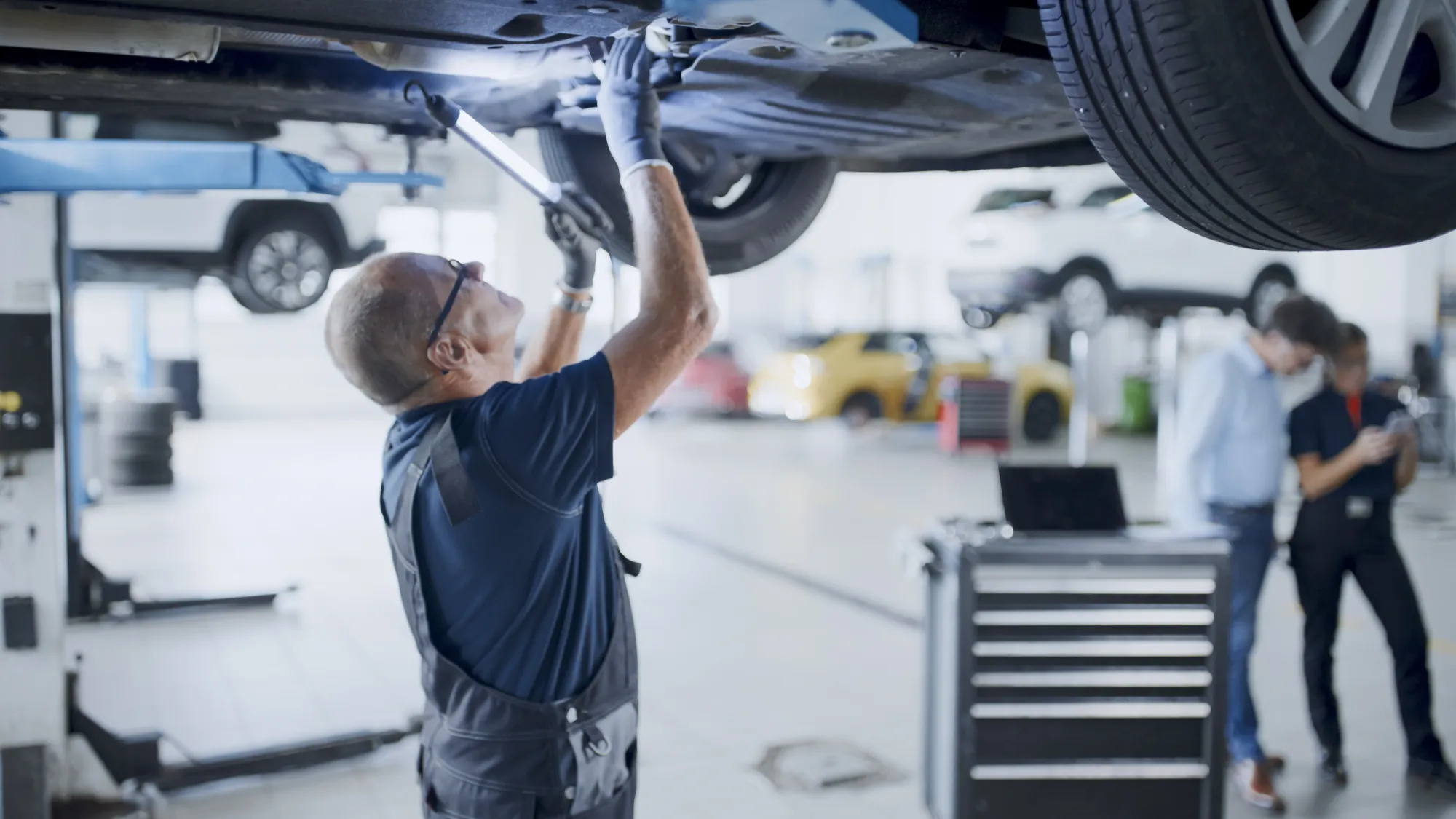
From there, the sequence in the bay mirrors this article. Confirm the loss against a baseline. Account for season and driving pattern. Measure inflation against the placard and check alignment and tire condition. Check for drag at each corner. Then, and only then, go to live data for coolant temperature behavior, fuel trims, and sensor response.
That order finds the common, cheap causes before anyone spends time on the rare, expensive ones. What the repair involves depends on what we find, so ask us for a current quote once the cause is on the table.
Schedule Engine Diagnostics in Terre Haute at Don’s Service Center
A dark dashboard is not a clean bill of health, and a fuel economy complaint deserves the same real diagnosis as a warning light. If you’ve been searching for auto repair in Terre Haute, IN because your mileage fell off and nothing on the dash will explain why, that’s exactly the kind of work we like.
Don’s Service Center has served Terre Haute, Vigo County and the wider Wabash Valley since 1982, and we work these complaints the way they should be worked: by measuring, in order, until the number explains itself.
If you’re filling up more often than you should be, bring us your tank-to-tank math and let us find out why. Schedule an appointment and we’ll take it from there.