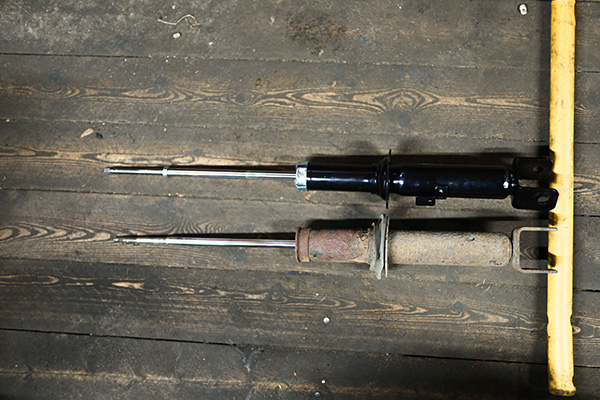
Shock absorbers tend to wear out quietly. The car still drives, nothing is obviously broken, and you can get used to the extra movement without realizing it happened. Then a pothole hit feels harsher than it should, or the car feels a little busy on the highway, and you start wondering what changed.
A few specific clues can tell you when shocks are the real culprit.
What Shocks Actually Do
Shocks do not hold the vehicle up, springs handle that job. Shocks control how fast the suspension moves, and they keep the tires planted when the road is uneven. When they are doing their job, the car settles quickly after a bump instead of continuing to bounce. That tire contact is what keeps braking, steering, and stability feeling predictable.
When shocks wear, the car can still feel fine on smooth roads, which is why the problem sneaks up. The weak point shows itself on rough pavement, quick lane changes, and long sweeping dips where the body keeps moving. You might also notice that the car feels less confident when you have passengers or cargo.
The Most Common Reasons Shocks Wear Out
Heat and motion are the big enemies. Shocks work by pushing oil through valves, and that oil heats up as it controls movement. Over thousands of miles, seals age, internal valves wear, and the shock starts losing control. Roads with lots of bumps speed that up because the shock is working harder every mile.
Big impacts matter too. A hard pothole hit can damage a shock internally or stress the mounts and bushings around it. We’ve seen vehicles where one hard hit didn’t cause an immediate problem, but it kicked off a slow decline that showed up as uneven tire wear later. If your routes are rough, shocks often wear earlier than the odometer alone suggests.
Driving Clues That Point To Worn Shocks
The easiest way to notice worn shocks is to pay attention to body motion. If the front dips harder when you brake, or the rear feels like it squats more when you accelerate, that can be a damping issue. If the car bounces more than once after a bump, that is another classic sign. It can also show up as a “wallow” feeling on the highway, where the car never quite settles.
Here are a few common driving clues drivers report when shocks are tired:
- The car bounces longer after speed bumps or dips
- The steering feels less settled over rough pavement
- The front end dives more during braking
- The rear feels loose or floaty on wavy highways
- The tires start cupping, which can sound like a low growl
It helps to notice when it happens. If the car feels fine on a smooth road but gets busy on patched pavement, that points more toward shocks than tires alone. If the feeling gets worse with passengers or cargo, that is another hint that the suspension is losing control. We usually ask for these details because they narrow down the cause fast.
Visual Clues During A Quick Check
Sometimes the shock gives you a clear visual hint. If you see oily residue on the shock body, that can mean the seal is leaking, and the shock is losing fluid. A shock without enough fluid cannot control motion the way it should. Loose or cracked mounts can also create clunks that sound like something bigger.
During an inspection, we also look at the tires and suspension around the shocks. Cupped tread can suggest weak damping, and torn boots or worn bushings can add looseness that feels like bad shocks. This is why it is smart to check the full area instead of replacing one part and hoping it fixes everything. The goal is a fix that restores control and keeps the tires wearing evenly.
Why Delaying Shock Replacement Gets Expensive
Worn shocks can quietly cost you money in two ways. First, they can shorten tire life by allowing the tire to bounce and lose consistent contact with the pavement. That creates uneven wear patterns that rotations cannot undo once they are established. Second, extra movement can stress other suspension parts, like bushings and mounts, because they are dealing with more motion than they were designed to handle.
There is also a safety angle that shows up in real driving. If the tires are not planted, stopping distances can increase on rough roads, and the car can feel less stable in quick maneuvers. Most people do not notice it until they hit a situation that demands a quick stop or a sudden lane change. Handling it earlier usually keeps the repair simpler and protects the rest of the suspension.
How To Make New Shocks Last Longer
New shocks last longer when the rest of the setup is kept in good shape. Keeping tires properly inflated and rotating them on schedule reduces harsh impacts and keeps the suspension working evenly. Avoiding repeated hard hits helps too, even if that means slowing down for broken pavement when you can. Those habits are part of regular maintenance that pays off in ride quality and tire life.
It also helps to watch for small problems that can accelerate wear, like worn bushings or a loose mount. If something starts clunking or the car begins to feel unsettled, getting it checked early prevents one weak part from beating up the next. We’ve seen plenty of cases where a small fix early kept a bigger suspension bill from showing up later.
Get Shock Absorber Service In Terre Haute, IN, With Don's Service Center
Don's Service Center in Terre Haute, IN, can check your shocks and suspension wear points and help you decide what should be replaced now versus what can be planned.
Schedule a visit and get your ride feeling controlled again.