An overheating engine gets serious fast. The temperature gauge climbs, the heater starts acting strange, or steam shows up at the worst possible time. A lot of drivers still hope it is something temporary, especially if the car cools down again after sitting for a while.
That hope is where bigger trouble starts. An overheating problem can go from annoying to expensive in a matter of minutes.
Why Overheating Should Never Be Treated Like A Small Thing
Your engine depends on a cooling system that stays sealed, full, and able to move heat away every time the car runs. Once that system falls behind, temperatures rise quickly. The hard part is that the car can seem fine right up until it is not.
Some drivers notice the problem in traffic. Others catch it on a longer drive, with the A/C on, or after the engine has already been working harder than normal. Either way, the warning should not be brushed aside.
Low Coolant Is One Of The First Things To Check
A low coolant level is one of the most common reasons an engine starts running hot. If there is not enough coolant in the system, the engine cannot carry heat away the way it should. That can happen because of a leak, a loose connection, a worn cap, or another cooling system fault that has been quietly developing.
Topping it off may help for the moment, but coolant does not disappear for no reason. If the level keeps dropping, the system needs an inspection to find out where it is losing pressure or fluid.
The Radiator Might Be The Problem, But Not Always
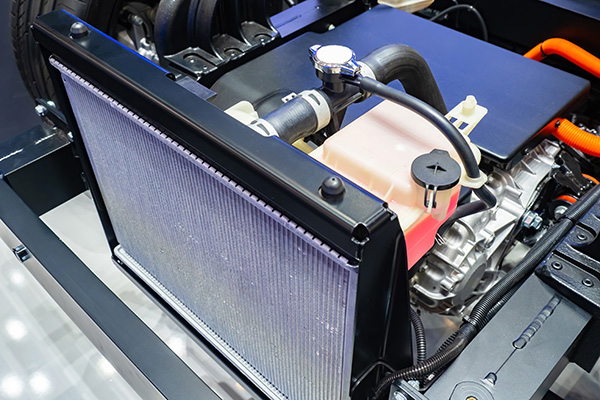
A bad radiator can absolutely cause overheating. If the radiator is leaking, clogged inside, blocked on the outside, or damaged enough that airflow cannot move through it correctly, cooling performance drops. At that point, the engine starts carrying more heat than the system can shed.
Still, not every overheating complaint points straight to radiator repair. Drivers hear overheating, and the first thing they think of is the radiator, but the cooling system has several parts that can create the same symptom. That is why guessing gets expensive.
Water Pump, Thermostat, And Cooling Fan Problems Can Look Similar
A weak water pump cannot circulate coolant properly. A stuck thermostat can stop coolant from flowing when the engine needs it most. A cooling fan that won't turn on can leave the car running much hotter at idle or in traffic than it does at highway speed.
Those faults can feel a lot like radiator trouble from the driver’s seat. The gauge climbs, the heat gets worse, and the engine starts sending a clear warning. The real cause is what separates a radiator repair from a different cooling system job.
Signs The Radiator Really Is The Trouble Spot
There are a few clues that move radiator trouble higher on the list:
- Coolant is leaking from the front of the vehicle
- Dried coolant residue around the radiator tanks or seams
- Bent, damaged, or blocked cooling fins
- A sweet smell after driving
- Temperature is climbing more in traffic than at speed
Those signs do not prove the radiator is the only problem, but they do point the repair in that direction. A pressure test and cooling system check help confirm whether the radiator is leaking, restricted, or simply one part of a larger issue.
What Happens If You Keep Driving It Hot
An engine that keeps overheating is not just uncomfortable to deal with. It is at risk. Too much heat can stress the head gasket, warp engine components, and create internal damage that costs far more than the original cooling system repair. That is why a driver who keeps pushing the car after the temperature has already climbed is gambling with more than just a tow bill.
A lot of expensive engine repairs start with a smaller overheating problem that has sat too long. That is one reason regular maintenance on the cooling system pays off so well. Catching leaks, old coolant, and weak parts early keeps the engine out of that danger zone.
When Radiator Repair Makes Sense
Radiator repair makes sense when the radiator itself is leaking, corroded, physically damaged, or restricted enough to stop doing its job. In some cases, a hose, thermostat, fan, or water pump is the real cause instead. The right answer comes from testing the whole system, not assuming every overheating problem means radiator replacement.
That is why the smartest move is to stop focusing only on the gauge and start focusing on the cause. The sooner the system is checked, the better the chance of keeping the repair limited to the cooling side instead of letting engine damage enter the picture.
Get Radiator Repair In Terre Haute, IN, With Don's Service Center
If your car is overheating, losing coolant, or showing signs that the radiator may be failing, Don's Service Center in Terre Haute, IN, can inspect the cooling system, confirm the source of the problem, and help you fix it before the heat does more damage.
Bring it in early and take care of the cooling problem before it turns into engine trouble.